



 01462 435686

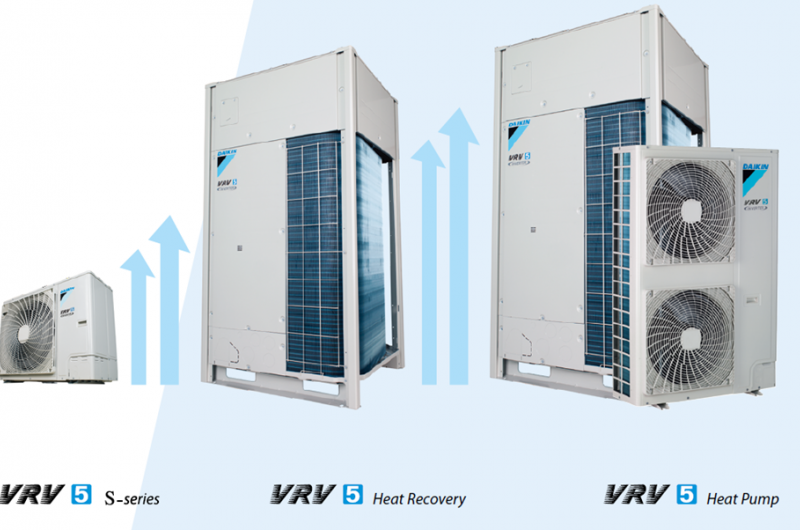
Daikin's VRV 5 product family leads the air conditioning market in terms of innovation, protecting the environment and, of course, safety. This latest briefing from Daikin clarifies their position and informs installers of the benefits of choosing VRV 5 technology.
Briefing Date: January 2026
As a manufacturer of heating, ventilation, air conditioning, and refrigeration systems, Daikin places strong emphasis on product safety. Compliance with relevant safety standards underpins the design and manufacture of every product.
By following the IEC 60335-2-40 standard, Daikin’s VRV 5 systems, by extension, comply with EN 378 standard. The following paragraph provides further detail and explanation of this statement.
Both safety standards cover flammability and toxicity, and cross-reference each other:
At the beginning of EN 378, Part 1, Clause 1 (Scope), the following statement is made: “Product family standards dealing with the safety of refrigerating systems take precedence over horizontal and generic standards covering the same subject”.
EN 378 is classed as a "Generic" standard, whilst IEC 60335-2-40 is classed as a "Product Family" standard, as it specifically covers air conditioning. Therefore, the IEC standard is classed as the full product standard for refrigerant safety measures in VRV systems.
Additionally, the IEC 60335-2-40 standard is relevant for commercial applications as per the following text “for particular requirements for electrical heat pumps, air-conditioners and dehumidifiers”:
Clause 1 Scope:
“…appliances and machines which are declared to be used for commercial use, by lay persons are within the scope of this document”. This covers air conditioning systems in commercial applications.
Daikin VRV 5 systems are compliant with the IEC 60335-2-40 and EN 378 standards for refrigerant safety for flammability and toxicity, and this has been certified by an independent third-party regulatory body.
Product standards use refrigerant concentration limits to ensure safety - the lower the limit, the stricter they are.
Whichever of the two requirements is stricter between flammability and toxicity is the figure that must be used to ensure the highest level of safety. The IEC standard has a stricter limitation than EN 378 by having a lower maximum concentration limit that can exist in the space.

The allowed toxicity level for R-32 in EN 378 is always more lenient than the maximum flammability level required in the IEC 60335-2-40.
The alarms and shut-off valves that come standard with Daikin VRV 5 systems comply with IEC 60335-2-40 to ensure the maximum flammable concentration is never exceeded. Therefore, the maximum concentration level for toxicity under the EN 378 standard can never be exceeded.
By following IEC 60335-2-40, the position of the leak detector within the unit complies with the standard; the position of the leak detectors ensures that the leak is detected earlier than it would be under the EN 378 standard requirement. Therefore, additional leak detectors are not required as they would serve no useful purpose and would never be activated, as the toxicity limit could not be reached.
The Daikin VRV 5 systems comply with IEC 60335-2-40 and, therefore by extension, EN 378. EN 378 explicitly directs us to the IEC standard for refrigerant safety measures, which is the stricter of the two, and our approach is third-party certified by an independent body.
A GUIDE TO R-32 VRV TECHNOLOGY SAFETY STANDARDS - MARCH 2026
DAIKIN VRV 5 COMPLIANCE WITH RELEVANT SAFETY STANDARD - JANUARY 2026
FAQ's ON VRV 5 SAFETY STANDARD COMPLIANCE - JANUARY 2026
Sign up for our regular monthly email and be among the first to know about: